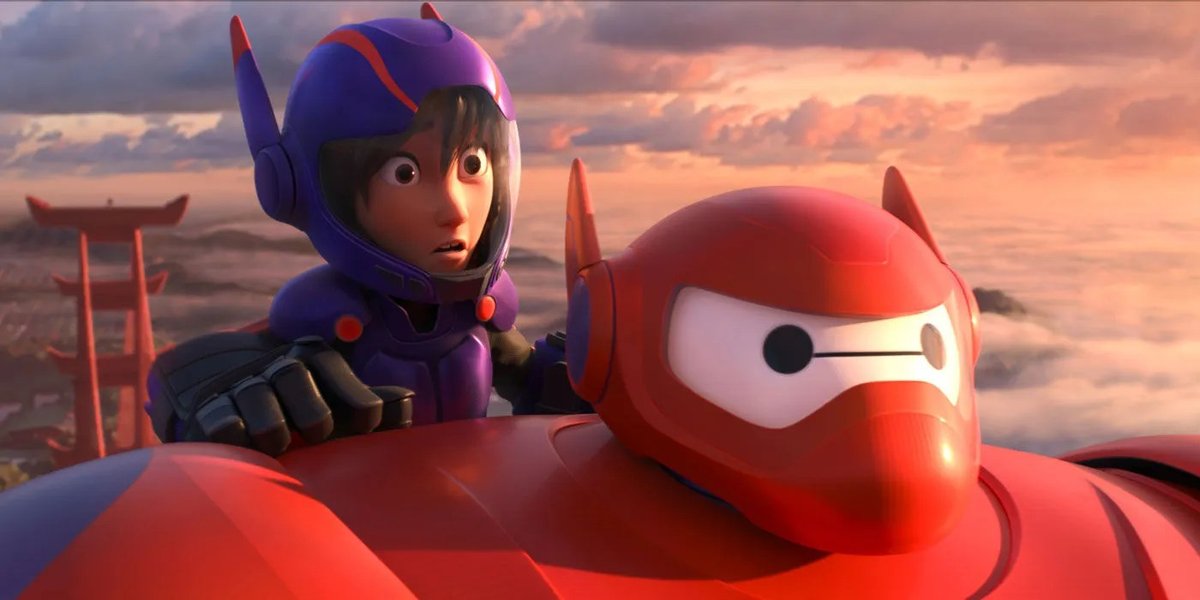
The world of San Fransokyo, a vibrant fusion of East and West, captured hearts a decade ago with Big Hero 6. Its blend of superhero action, touching emotional depth, and groundbreaking animation earned it an Academy Award and a place in Disney's pantheon. Fast forward to today, and while the beloved characters of Hiro Hamada and Baymax continued their adventures in Big Hero 6 The Series, the question of a direct movie sequel persists. The Impact of Big Hero 6 The Series on a Movie Sequel remains a fascinating, often misunderstood, topic for fans and industry observers alike.
Many hoped the series would act as a bridge, a narrative stepping stone towards Big Hero 6 2. Instead, we find ourselves a decade out from the original film, with no concrete plans for a theatrical follow-up. What role, then, did the series truly play in this ongoing narrative? Was it a substitute, a diversion, or simply a separate, equally valuable expansion of a beloved universe?
At a Glance: The Series' Shadow Over a Movie Sequel
- No Active Movie Sequel Plans: Despite the series, there are currently no confirmed plans for a Big Hero 6 theatrical sequel.
- Creator-Driven Decisions: The original film's co-director, Don Hall, holds the key. Producer Roy Conli indicates a sequel hinges on Hall's interest in revisiting the property.
- Series as an Extension, Not a Prequel/Sequel Setup: Big Hero 6 The Series continued the characters' adventures but didn't explicitly set up a future movie, operating more as its own continuity.
- Live-Action Rumors Unconfirmed: Speculation about a live-action adaptation or MCU integration is widespread but lacks official Disney confirmation.
- Keeping the IP Alive: The series (and later, Baymax! on Disney+) ensured the characters stayed in the public eye, even without a big-screen return.
- Focus on New IP: Hall's preference for new projects over revisiting old ones is a significant factor in the sequel's absence.
The Big Picture: Why a Big Hero 6 Movie Sequel Hasn't Materialized (Yet)
The success of Big Hero 6 was undeniable. Over $650 million globally, an Oscar win, critical acclaim, and the creation of an enduringly popular character in Baymax. For many studios, these metrics would immediately greenlight a sequel. Disney, in particular, is known for revisiting successful animated properties. So, why the long silence for San Fransokyo's finest?
The answer, as producer Roy Conli explained, lies largely with the original creative principals. Conli has stated explicitly that the decision to pursue a sequel rests primarily with co-director Don Hall. "It was Don’s concept and idea," Conli noted, adding that while he "secretly urge[s] him to do it," Hall often prefers to work on new properties. This isn't a case of Disney overlooking a hit; it's a testament to the studio's respect for creator vision, allowing the original architects of the world to determine its future.
This "creator-driven" model contrasts with a purely "studio-driven" pipeline, where commercial success alone might dictate a sequel. For Big Hero 6, the magic wasn't just in the concept but in the specific artistic voices that brought it to life. Without that foundational creative interest, a sequel, even a commercially viable one, might not feel authentic to its origins.
Big Hero 6 The Series: Expanding San Fransokyo Without the Big Screen
In the absence of a film sequel, Big Hero 6 The Series stepped in to continue the adventures of Hiro, Baymax, and the rest of the team. Running for three seasons on Disney XD (and later Disney Channel), the series picked up directly after the events of the movie, offering fans more of what they loved.
The series excelled at:
- Character Development: It allowed for deeper dives into the personal lives and relationships of Hiro, Go Go, Wasabi, Honey Lemon, and Fred, exploring their struggles with identity, teamwork, and the responsibilities of being superheroes in a nuanced, episodic format.
- World-Building: San Fransokyo expanded beyond the movie's scope, introducing new locations, more diverse citizens, and a wider array of supervillains and adversaries. This solidified the city as a living, breathing entity.
- New Villains and Challenges: The series wasn't afraid to introduce a Rogues' Gallery of quirky and sometimes genuinely threatening foes, keeping the team on their toes and providing fresh narrative arcs.
- Maintaining the Tone: Crucially, the show retained the heartwarming blend of action, humor, and emotional sincerity that defined the original film, ensuring continuity in the franchise's spirit.
From a fan's perspective, the series was a welcome continuation, providing countless hours of content with beloved characters. It kept the IP vibrant and ensured that new generations could discover Hiro and Baymax. It served as a powerful reminder of the property's enduring appeal.
Does the Series 'Count' as a Sequel? Nuances in Franchise Expansion
This brings us to a fundamental question: Did Big Hero 6 The Series effectively act as the sequel fans craved, or was it something distinct? The answer is nuanced.
While the series continued the narrative directly, featuring the original voice cast for most main characters, its format inherently distinguishes it from a theatrical sequel. Animated series, even high-quality ones, often operate with different budgets, animation styles, and narrative structures than feature films. A TV series allows for episodic storytelling, longer character arcs that unfold over many hours, and a focus on smaller stakes or "villain-of-the-week" plots, interspersed with overarching season-long narratives.
A movie sequel, by contrast, typically demands a grander scale, a more cinematic visual style, and a self-contained, high-stakes story that justifies its theatrical release. It's designed to be a singular, impactful event.
So, while the series provided a continuity of story and character, it didn't quite fill the space a movie sequel would occupy. It satisfied the desire for more Big Hero 6 but left the itch for Big Hero 6 2 unscratched for many. It’s an expansion, not a direct replacement for what a feature film sequel typically offers.
The Live-Action Rumor Mill: A Distraction or a New Path?
Adding another layer to the sequel discussion are the persistent whispers of a live-action Big Hero 6 adaptation. Reports from rumor-driven and fan-oriented sites in 2024-2025 suggested Disney was "considering" such a project, sometimes even linking it to the Marvel Cinematic Universe (MCU).
This isn't surprising. Disney has a proven track record of converting animated classics into live-action blockbusters, driven by their commercial success. The MCU connection is particularly enticing for fans, given Big Hero 6's origins in Marvel Comics (though heavily adapted for the film). The idea of Baymax alongside established MCU heroes is certainly a compelling thought for many.
However, it's crucial to separate speculation from fact. Authoritative outlets and Disney spokespeople have not confirmed any active live-action production or release plans. The current wave of coverage stems from fan enthusiasm and commercial logic rather than official announcements. Filmmakers connected to the original animation continue to state that there are "no concrete sequel plans" and emphasize that any follow-up hinges on the interest of original creators – a sentiment that applies equally to animated and live-action continuations.
For fans, the live-action rumors generate a mix of excitement and skepticism. There's enthusiasm for seeing the world of San Fransokyo brought to life, but also concerns about maintaining the tone, the challenges of casting, and how beloved characters like Baymax would translate to live action. Ultimately, until official word comes from Disney, these remain captivating "what ifs."
The Creator's Vision: The Ultimate Gatekeeper
Producer Roy Conli's statements underscore a critical aspect of creative properties: the importance of the original visionaries. Don Hall, as co-director of the original Big Hero 6, played a pivotal role in crafting its narrative and emotional core. His creative input isn't just a preference; it's seen as essential to maintaining the integrity of the property.
This approach speaks to a broader industry trend where studios, particularly with beloved and critically acclaimed works, value the unique perspective of their initial creators. Forcing a sequel without their genuine creative investment can lead to a soulless product that ultimately disappoints fans and tarnishes the original's legacy. Hall's expressed interest in working on "new property" is a common sentiment among creative minds; the allure of fresh ideas often outweighs the comfort of revisiting past successes. This perspective doesn't diminish the love for Big Hero 6; it simply reflects an artist's natural drive for innovation and exploration. For those eager to explore All about Big Hero 6 2 and its potential future, understanding this creator-centric dynamic is key.
What Does This Mean for Fans? Managing Expectations
For those who regularly check for news on Big Hero 6 2, the current landscape can feel frustrating. The series provided a wonderful extension, but it didn't solve the "movie sequel" puzzle. The constant buzz around live-action adaptations only adds to the confusion.
Here's a breakdown of what this reality means for you as a fan:
- Cherish the Existing Content: Big Hero 6 The Series is a rich, enjoyable continuation of the story. It allows for deeper character exploration and more adventures than a single film ever could. Revisit it, and the more recent Baymax! series on Disney+, and appreciate the continued life these characters have been given.
- Understand Creator Dynamics: Acknowledge that creative decisions often drive franchise futures. Don Hall's preference for new projects is a valid artistic choice, even if it delays a sequel you're hoping for.
- Approach Rumors with Skepticism: While fun to discuss, unconfirmed rumors about live-action adaptations or MCU integrations should be taken with a grain of salt. Rely only on official announcements from Disney or Marvel.
- Support New Work from Creators: If you admire the talent behind Big Hero 6, support Don Hall's new films. His creative energy might one day circle back to San Fransokyo, but only if he finds the right story to tell.
The Lingering Question: Will We Ever See Big Hero 6 2?
So, after a decade and a successful animated series, will we ever see Hiro, Baymax, and the team return to the big screen for a direct cinematic sequel? The most honest answer remains: it's highly uncertain.
The Big Hero 6 universe is vibrant and beloved. Its characters resonate deeply with audiences. The commercial success is undeniable. But as producer Roy Conli has made clear, the decision isn't solely a commercial one. It's a creative one, resting largely on the shoulders of co-director Don Hall.
The series successfully kept the property alive and explored new facets of the characters and their city. It demonstrated the enduring appeal of San Fransokyo without needing a theatrical release. This could be seen as both a blessing and a curse: a blessing because the story continued, and a curse because it might have alleviated some of the studio pressure to produce a film sequel.
Until Don Hall or other key creative principals express a renewed interest and a compelling story idea that genuinely excites them for a feature film, the Impact of Big Hero 6 The Series on a Movie Sequel will continue to be that of a successful, standalone expansion rather than a direct precursor to a theatrical follow-up. Fans are left with a fantastic original film and a robust animated series, perhaps the best outcome in the absence of a creatively inspired Big Hero 6 2.