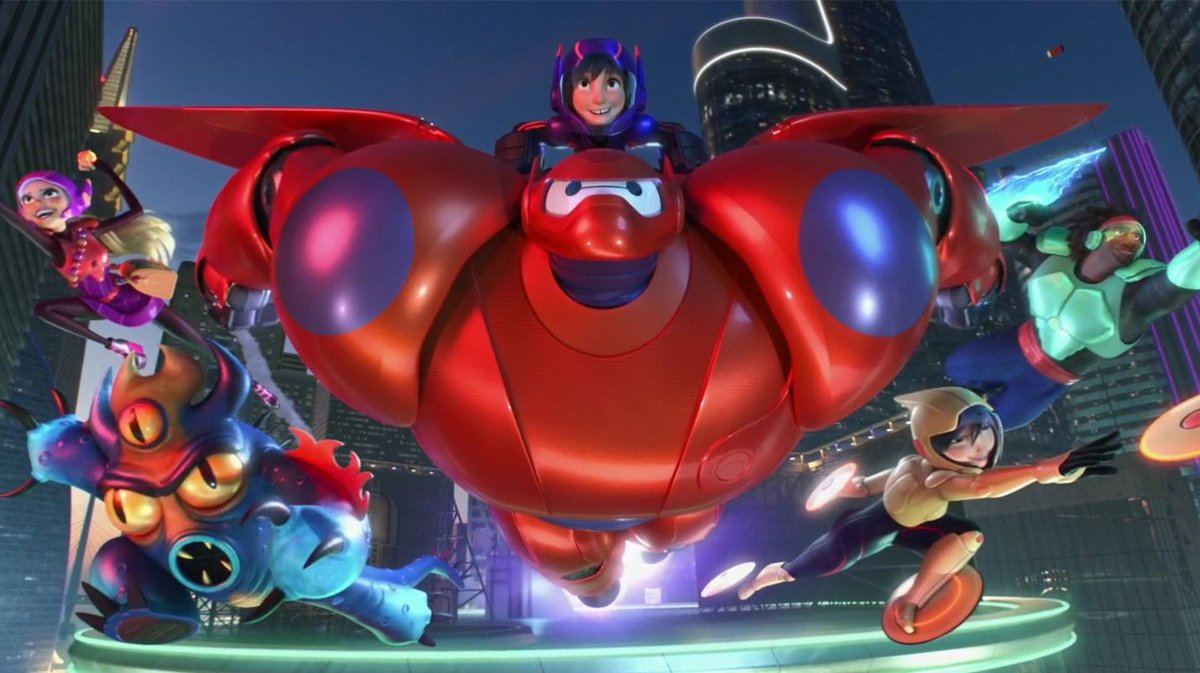
For fans of "Big Hero 6," the question of a sequel has lingered for a decade, growing more insistent as 2024 marks the original film's tenth anniversary. Yet, when we talk about Big Hero 6 2 Release Date & Platform Predictions, we're not just reading tea leaves; we're essentially decoding the creative philosophy of one man: co-director Don Hall. While the animated superhero adventure was a runaway success, its future in theaters remains surprisingly tethered to the preferences of its visionary.
It’s a peculiar situation for such a beloved and acclaimed film, especially when its universe has continued to thrive on the small screen. So, why the holdup? And what would it actually take to bring Hiro, Baymax, and the rest of the gang back to the big screen? Let’s dive into the complex web of creative intent, studio strategy, and fan hopes that shape the likelihood of a "Big Hero 6 2."
At a Glance: What We Know (And Don't) About a Big Hero 6 Sequel
- No Active Theatrical Sequel Development: Despite persistent fan demand and the film's success, "Big Hero 6 2" is not currently in production as a feature film at Walt Disney Animation Studios.
- The Don Hall Factor: The decision for a direct theatrical sequel largely rests with co-director Don Hall, who originated the film's concept. He reportedly prefers to work on new properties.
- Producer's Plea: Producer Roy Conli has admitted to secretly urging Hall to make a sequel, highlighting the internal desire for one.
- Franchise Continuity on TV: The "Big Hero 6" universe has continued successfully with two acclaimed television spin-offs: "Big Hero 6" (2017-2021) and "Baymax!" (2022).
- Any Future Sequel is Highly Speculative: Predicting a release date or platform is purely theoretical and depends on significant shifts in creative leadership or Disney's long-term strategy.
- Streamable Now: The original "Big Hero 6" film is available to stream on Disney+.
A Decade of Delight: Revisiting the "Big Hero 6" Phenomenon
On November 7, 2014, Walt Disney Animation Studios unleashed "Big Hero 6" upon the world, a vibrant, emotionally resonant adventure that quickly captured hearts. Loosely inspired by the Marvel Comics team of the same name, the film plunged audiences into the futuristic, fusion-culture metropolis of San Fransokyo. We followed the journey of robotics prodigy Hiro Hamada, who, after a tragic loss, teams up with his late brother Tadashi’s inflatable healthcare companion, Baymax, and a group of quirky university friends to form an unlikely superhero team.
The film wasn't just a hit; it was a phenomenon. Critics lauded its innovative animation, compelling story, humor, and heartfelt themes. Commercially, it soared past $650 million worldwide, cementing its place as a global success. Its crowning achievement came at the 87th Academy Awards, where it rightfully earned the Oscar for Best Animated Feature. The impact didn't stop there; "Big Hero 6" even inspired its own land at Disney California Adventure, a testament to its enduring popularity and the creative power of its world. For more on the original film's impact and story, you can Explore Big Hero 6 2.
Given such an impressive pedigree, it seems almost counter-intuitive that a direct theatrical sequel hasn't materialized. Most studios would jump at the chance to capitalize on such a beloved and successful property. So, what's truly holding "Big Hero 6 2" back from the big screen?
The Creative Conundrum: Don Hall's Vision Holds the Key
This is where the story of "Big Hero 6 2" takes a turn from typical Hollywood sequel logic. Unlike many franchises driven purely by box office potential, the fate of a "Big Hero 6" theatrical sequel rests squarely on the shoulders of one individual: co-director Don Hall.
Hall, who co-directed the original film with Chris Williams, was the driving force behind the film's concept. He brought the obscure Marvel comic series to Disney Animation and oversaw its transformation into the distinct, emotionally rich world we know. This creative ownership means a great deal at Walt Disney Animation Studios (WDAS), where films are often deeply intertwined with the vision of their directors.
The challenge? According to producer Roy Conli, Don Hall has a distinct preference for working on new properties. He's a creative visionary who thrives on building worlds and stories from the ground up, rather than returning to existing ones. Conli himself has admitted to secretly urging Hall to consider a sequel, a telling detail that highlights the internal desire for more "Big Hero 6" even within the studio, tempered by respect for creative autonomy.
This preference isn't a slight against "Big Hero 6"; it's a testament to Hall's artistic drive for innovation. For WDAS, a director-driven studio, pushing a sequel without the enthusiastic, fresh creative spark of its original architect is often seen as compromising the very quality that made the first film great. While another director could technically take the helm, it would be an unusual move for a direct WDAS theatrical sequel and likely face significant internal and external scrutiny. This creative philosophy is the primary, immovable obstacle to a "Big Hero 6 2."
The Franchise Lives On: Television Adventures in San Fransokyo
While the theatrical sequel has remained elusive, the "Big Hero 6" franchise has been far from dormant. Instead, it’s found new life and expanded its narrative through two distinct television spin-offs, proving that the world of San Fransokyo is ripe for further exploration—just not necessarily on the silver screen.
First came the aptly named "Big Hero 6: The Series," which ran from 2017 to 2021. Airing on Disney XD and later Disney Channel, this series served as a direct continuation of the feature film's story. Across three seasons and 56 episodes, it followed Hiro, Baymax, Go Go, Wasabi, Honey Lemon, and Fred as they balanced their superhero duties with their everyday lives as students at the San Fransokyo Institute of Technology. The show successfully deepened character relationships, introduced new villains, and further explored the unique setting, keeping the spirit of the original film alive for a dedicated audience.
Then, in a significant move for Walt Disney Animation Studios, came "Baymax!" Released on June 22, 2022, on Disney+, this six-episode series was notable as the first television series directly produced by Walt Disney Animation Studios itself. While "Big Hero 6: The Series" was produced by Disney Television Animation, "Baymax!" brought the feature film studio's touch back to the small screen. The series offered a charming, episodic look at Baymax fulfilling his original programming as a healthcare companion, helping various citizens of San Fransokyo with their physical and emotional ailments. It was a gentle, heartwarming return to the character, reinforcing his core purpose and the film's message of care.
These spin-offs demonstrate several key points:
- The IP is Valued: Disney clearly sees ongoing value and audience interest in the "Big Hero 6" property.
- Story Potential: There's no shortage of stories to tell with these characters and in this world.
- Platform Diversification: Disney is comfortable leveraging its streaming platform, Disney+, as a primary home for continuing beloved stories, especially through series or shorter-form content.
The existence of these successful TV endeavors paradoxically makes a theatrical sequel less urgent for Disney. They've already satisfied some of the demand for new "Big Hero 6" content, albeit in a different format.
Decoding Disney's Sequel Strategy: The Road Less Traveled
If Don Hall's creative leanings are the primary roadblock, then what kind of external forces or internal shifts could potentially pave the way for a "Big Hero 6 2"? Understanding Disney's broader approach to sequels offers some clues, though rarely guarantees.
Disney Animation, unlike some other studios, isn't known for churning out sequels to every successful film. When they do pursue a follow-up, it’s typically after a significant gap and often with a very strong creative reason, usually spearheaded by the original creative team. Think of the gap between Frozen and Frozen 2, or Wreck-It Ralph and Ralph Breaks the Internet. These weren't rushed productions; they were carefully considered projects, often only greenlit once a compelling new story idea emerged that justified a return.
- The "Anniversary" Effect: While 2024 marks the 10th anniversary, it hasn't automatically triggered a sequel announcement. However, major anniversaries (like a 15th or even 20th) can sometimes be a catalyst for re-evaluating popular IPs. Could the growing nostalgia and continued fan enthusiasm reach a tipping point in a few more years?
- The Streaming Era's Influence: Disney+ has fundamentally altered how Disney monetizes and expands its intellectual property. As seen with "Baymax!," and even other feature-length content (like Raya and the Last Dragon initially having a hybrid release during the pandemic), Disney has shown willingness to produce high-quality animation for its streaming platform. This raises a crucial question: if "Big Hero 6 2" were to happen, would it necessarily be a theatrical tentpole, or could it be envisioned as a premium Disney+ original film?
- Creative Spark, Not Just Revenue: Ultimately, for Walt Disney Animation Studios, the quality and integrity of the story often take precedence over purely commercial calculations for theatrical features. A sequel needs a compelling narrative reason to exist, one that excites the filmmakers as much as it excites the audience. If Hall were to have a sudden, brilliant idea for a new story that he couldn't tell through a series, that would be the most likely trigger.
Without that core creative drive from Don Hall, a theatrical sequel would represent a significant deviation from WDAS's established model for feature animation. It would suggest either an unprecedented change in Hall's preferences or a strategic decision by Disney to move forward with the IP under new leadership for a theatrical release, a scenario that feels less aligned with their brand-building approach for their primary animation studio.
If a Sequel Were to Happen: Creative Considerations and Potential Pathways
Let's indulge in some "what if" scenarios. If the stars aligned and "Big Hero 6 2" were to get the green light for a theatrical release, what would it look like?
1. The Hall Factor Revisited: A Creative Revelation
The most optimistic, albeit least likely, scenario is that Don Hall genuinely has a change of heart. Perhaps he finds a story idea so compelling, so fresh, that it re-ignites his passion for the world of San Fransokyo. This wouldn't be a reluctant return but an enthusiastic one, driven by a vision that simply must be a feature film. This story would likely deepen the themes of loss, heroism, and family, perhaps introducing a new, formidable threat that requires the team's combined evolution, or exploring a new facet of Hiro's genius and Baymax's capacity for care.
2. A New Director at the Helm: An Uncharted Path for WDAS?
While highly unusual for a direct theatrical sequel from Walt Disney Animation Studios, the possibility of a new director taking over cannot be entirely dismissed. This would signal a strategic pivot by Disney, indicating that the IP's value outweighs the traditional director-driven model for this particular sequel. The chosen director would need to demonstrate a profound understanding of the original film's tone, characters, and visual style. They would face the immense pressure of living up to the original's legacy while bringing their own unique vision to the table. This path might be more probable if the sequel were conceived as a Disney+ original feature film rather than a full-blown theatrical release, allowing for a slightly different creative hierarchy.
3. Story Potential: Where Could Hiro and Baymax Go Next?
Regardless of who directs, a sequel would have ample story threads to pull from:
- Evolving Threat: The "Big Hero 6" TV series introduced many new villains. A film sequel could present a global or cosmic threat that tests the team's limits and requires a significant leap in their tech and teamwork.
- Personal Growth: Hiro is still young. A sequel could explore his continued coming-of-age, his leadership skills, or his relationship with Baymax as they navigate more complex moral dilemmas.
- Expanding San Fransokyo: The city itself is a character. There are undoubtedly more corners of this incredible metropolis to explore, perhaps even venturing beyond its borders.
- The Microbot Mystery: The microbots, central to the first film's plot, still hold intriguing potential. Could their creator's work, or even the technology itself, have unforeseen consequences or be repurposed for new challenges?
A successful sequel would need to build upon the emotional core of the first film, offering both thrilling action and poignant character development, all while maintaining the unique blend of humor and heart that defined the original.
The Release Date Riddle: Best-Case Scenarios & Realistic Timelines
Predicting a release date for "Big Hero 6 2" is like throwing darts blindfolded – especially without a confirmed green light. However, we can analyze typical animation production cycles and Disney's historical patterns to establish a speculative timeline.
Typical Animation Pipeline:
A major animated feature from Walt Disney Animation Studios typically takes 3 to 5 years from the moment it enters full production to its theatrical release. This timeline accounts for:
- Development: Storyboarding, script refinement, concept art.
- Pre-production: Character design, environment modeling, voice casting.
- Production: Animation, layout, lighting, visual effects, rendering.
- Post-production: Editing, scoring, sound design.
Hypothetical Greenlight Scenario:
Let's imagine, purely hypothetically, that Don Hall suddenly had a brilliant idea today and Disney gave "Big Hero 6 2" the immediate green light. - Earliest Possible Release: Under an aggressive timeline, a full-scale theatrical sequel wouldn't arrive before late 2027 or early 2028. This would require a very smooth, efficient production with minimal creative hurdles.
- More Realistic Timeline: A more typical timeline, allowing for the creative iteration and polish characteristic of WDAS films, would place a release closer to 2029-2030.
Anniversary Considerations:
Disney often capitalizes on significant anniversaries. - 15th Anniversary (2029): If a sequel were to be fast-tracked or had been quietly in very early development, targeting the 15th anniversary of the original film's release in 2029 would make strategic sense. This aligns with the "more realistic timeline" above.
- 20th Anniversary (2034): A longer wait isn't out of the question for Disney. Some franchises have seen returns after even longer gaps. A 2034 release would be a poignant way to celebrate two decades of "Big Hero 6" and could give Hall even more time to find that elusive perfect story.
Given the current information, any theatrical "Big Hero 6 2" would likely not see the light of day before 2028 at the absolute earliest, with 2029-2034 being a more probable, albeit still speculative, window if it were to ever move forward.
Platform Predictions: Theatrical, Disney+, or Both?
The question of where a "Big Hero 6 2" might land is almost as complex as when it might arrive, deeply intertwined with Disney's evolving distribution strategy in the streaming era.
1. The Theatrical Gold Standard (for WDAS Features):
Historically, all major Walt Disney Animation Studios feature films are designed for and released in theaters first. This is their flagship content, meant for the biggest screen and shared audience experience. If "Big Hero 6 2" were to be conceived as a true, big-budget WDAS feature, a theatrical release would almost certainly be the primary plan, followed by streaming on Disney+ months later. This is the model for films like Frozen 2, Raya and the Last Dragon (post-hybrid experiment), Encanto, and Wish.
2. The Disney+ Original Feature Angle:
The success of "Baymax!" on Disney+ opens up another intriguing possibility: a "Big Hero 6" original movie for the streaming platform.
- Different Scale: While still high-quality, Disney+ original films (like Chip 'n Dale: Rescue Rangers or Disenchanted) sometimes operate with different budgets and production timelines than their theatrical counterparts.
- Continuing the Narrative: A Disney+ original film could serve as an extended episode, a bridge between seasons (if the series were to return), or a self-contained adventure that doesn't demand the massive box office pressure of a theatrical tentpole. This could be a way to tell a feature-length "Big Hero 6" story that might not fit Don Hall's preference for new theatrical IP, or for a new creative team to explore the universe without the full WDAS theatrical mandate.
- The "Legacyquel" Approach: Disney+ has also been home to continuations of beloved franchises, often with a slightly different tone or focus, that might not warrant a full theatrical run.
3. The Hybrid Model (Less Likely Now):
During the height of the pandemic, Disney experimented with hybrid releases (theatrical + Disney+ Premier Access) for films like Raya and the Last Dragon. However, this model has largely been phased out, with Disney prioritizing exclusive theatrical windows for its major features. It's highly unlikely "Big Hero 6 2" would adopt this strategy in the current landscape.
Conclusion on Platform:
If "Big Hero 6 2" is conceived as a full-fledged Walt Disney Animation Studios feature film with Don Hall's creative blessing, it will almost certainly be a theatrical release first.
If it's a feature-length continuation or spin-off that doesn't originate directly from Don Hall's new creative vision for WDAS features, then a Disney+ original movie is a very plausible alternative. This would allow the franchise to continue at a feature length without challenging WDAS's core theatrical strategy or Don Hall's creative preferences for new properties.
Addressing Fan Hopes & Common Misconceptions
The decade-long wait has naturally led to a rich tapestry of fan theories, hopes, and a few common misunderstandings. Let's tackle some of them.
Q: Is "Big Hero 7" happening?
A: There is currently no official announcement or indication of "Big Hero 7" or "Big Hero 6 2" being in active development as a theatrical feature film. The "7" often comes from the idea of a new member joining the team, but it's pure fan speculation at this point.
Q: Why won't Disney just make it? It made so much money!
A: While commercial success is undoubtedly a factor for any studio, Walt Disney Animation Studios, especially for its core features, also prioritizes the creative vision. As highlighted, co-director Don Hall's preference for new properties is the primary creative obstacle. Disney understands that forcing a sequel without the passionate, original creative drive can lead to a less impactful film. They prioritize quality and the director's vision for their main animation slate.
Q: Should I watch the TV series? Are they canon?
A: Absolutely! Both "Big Hero 6: The Series" and "Baymax!" are considered canon and directly continue the story of the film. They expand the characters, introduce new challenges, and further develop the world of San Fransokyo. For fans yearning for more "Big Hero 6" content, these series are essential viewing and are readily available on Disney+. They demonstrate that the franchise is still very much alive, just in a different format.
Q: Will Disney ever revisit it if Don Hall doesn't?
A: It's unlikely that Walt Disney Animation Studios would produce a direct theatrical sequel without the original director's creative involvement, as it goes against their typical operational model for their core animated features. However, Disney is a vast company. A "Big Hero 6" project could theoretically emerge from a different division (like a live-action adaptation or another animated project from Disney Television Animation) in the distant future, though a direct animated sequel from WDAS seems tied to Hall's interest.
Keeping the Dream Alive: What Fans Can Do
While the immediate future of "Big Hero 6 2" remains shrouded in creative uncertainty, that doesn't mean fans are powerless. Your passion and engagement do matter, even if indirectly.
- Stream and Re-watch: Continue to watch the original "Big Hero 6" film and both "Big Hero 6: The Series" and "Baymax!" on Disney+. Streaming numbers are a crucial metric for Disney, demonstrating ongoing audience interest and the value of the IP. The more these properties are watched, the clearer the signal of demand.
- Engage Respectfully Online: Share your love for the franchise on social media, tag official Disney Animation accounts, and express your desire for more stories. While polite enthusiasm is good, avoid aggressive demands, as this can be counterproductive.
- Support Don Hall's New Projects: If Don Hall continues to create new, original stories (as is his preference), support those films! This reinforces the idea that creative visionaries should be encouraged, which ultimately benefits Disney Animation's overall quality.
- Stay Tuned for Disney Animation News: Keep an eye on announcements from Walt Disney Animation Studios. While not specifically "Big Hero 6 2" news, understanding their upcoming slate and strategic directions can offer context.
- Cherish the Existing Story: Revisit the original film and its excellent television spin-offs. There's a rich, heartwarming, and action-packed world already available that continues to inspire and entertain.
The journey of "Big Hero 6 2 Release Date & Platform Predictions" is less about concrete facts and more about understanding the unique creative ecosystem of Walt Disney Animation Studios. Until co-director Don Hall feels a compelling, fresh story calling him back to San Fransokyo for a big-screen adventure, or Disney makes an unprecedented strategic shift, the beloved team of Hiro and Baymax will continue their heroics in our hearts and on our streaming devices. But hey, in a world of advanced robotics and interdimensional portals, anything is possible.